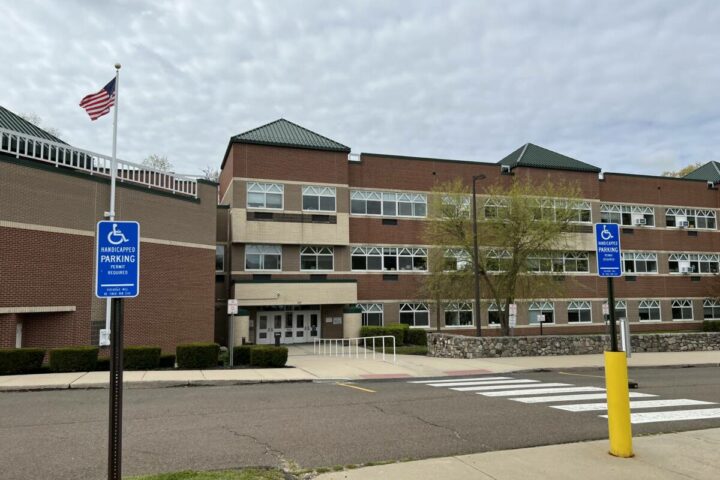
MONROE, Conn. — A Masuk High School alumnus attends Brown University, but Superintendent Joseph Kobza said the student is safe and has reunited with family in the aftermath of the mass shooting on the Ivy League campus in Providence, R.I., last Saturday, in which at least two people were killed and nine were injured.
“This incident, especially since it occurred on the eve of the Sandy Hook anniversary, was very disturbing and brings back strong emotions,” Kobza said Tuesday. “Our hearts go out to those affected by this tragedy, but we take some comfort in knowing that one of our Masuk graduates is safe and back with family.”
Kobza said no one from Monroe, that he knows of, was injured in the tragic incident.
On Monday, Monroe Public Schools’ counselors, school psychologists and social workers sent the following email to parents, caregivers and families:
In light of the tragic events this past weekend, we would like to remind you that there are professionals available in our school system for support.
We are deeply grateful to share that one of our Masuk alumni, who attends Brown University, is safe, reunited with family, and doing well. While we are relieved that this individual is okay, we recognize that even when loved ones are safe, tragic events can affect us all in profound emotional ways.
During times like these, it is especially important that we come together as a caring, compassionate community — one where kindness, understanding, and genuine support for one another are our guiding principles.
As families navigate conversations with children about grief, loss, recent violence, anti-semitism, and other difficult world events, experts encourage openness, age-appropriate dialogue, and reassurance.
The American Psychological Association (APA) highlights that talking with children about their thoughts and concerns helps them feel safe and supported, and that children look to trusted adults to help make sense of frightening news in a way that is honest yet reassuring.
Additionally, resources from trauma and mental health professionals note that listening carefully, responding with warmth and patience, and allowing children to express their feelings — through words, play, or creative activities — are key parts of helping them cope.
The National Alliance for Grieving Children offers free guidance on talking with children about death and loss, helping families find additional support and local resources if more help is needed.
We encourage parents and caregivers to be attentive to changes in behavior, sleep, or mood in their children and to reach out for support if you or your child are struggling. Trusted professionals such as school counselors, pediatricians, social workers, and mental health clinicians can provide support and referrals when needed.
Resources such as the National Child Traumatic Stress Network and Coalition to Support Grieving Students offer age-appropriate materials and guidance for families coping with grief and trauma.
Remember, building resilience is not about shielding children from hard realities, but about surrounding them with a supportive community that listens, cares, and helps them feel safe.
In times of uncertainty, let us continue to lean on one another with compassion, reach out when we need help, and nurture an environment where every member of this community knows they are valued and supported.
All respectful comments with the commenter’s first and last name are welcome.