

MONROE, CT — As a student at Masuk High School, anxiety about being in larger classes made Emily Cornut feel “lost, invisible and overwhelmed.” But the alternative education program, led by teachers Victor Alfandre and Patrick Petrie, made her feel seen.
“They cared about me as a person,” said Cornut, who is now in college. “They listened. They checked in and they believed in me when I couldn’t believe in myself. That kind of support isn’t just educational, it’s transformational.”
Cornut is currently maintaining a 3.7 grade-point average at the University of Connecticut and plans to pursue a doctorate degree to be a therapist specializing in addiction, trauma and grief counseling.
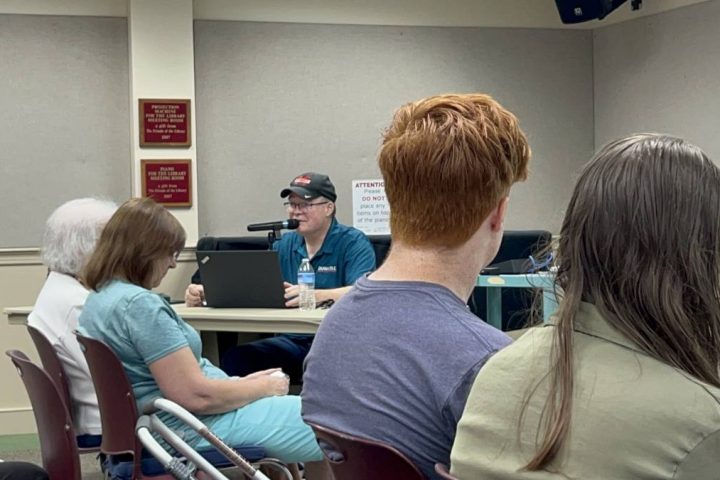
She is one of several former Alternative Program graduates who shared their own success stories during the Monroe Board of Education meeting on July 16.
Expressing concerns over changes to the program, several alumni said it has provided the foundation to positive futures and, in some cases, literally saved lives. They passionately expressed their hope that educators will keep it intact and unchanged for current and future students.
In a conference call on Monday, Superintendent of Schools Joseph Kobza, Masuk Principal Steve Swensen and Board of Education Chairman David Ferris told The Sun these concerns were sparked by misunderstandings.
They said the goal of their plan is to make the successful program more flexible to benefit more students.
Several speaking at the school board meeting had expressed the belief that changes are being made due to budget cuts.
“The board did not vote to cut the budget or the school,” Ferris said. “Nobody is going to be fired. They’re restructuring the program to meet the needs of the students.”
A new model
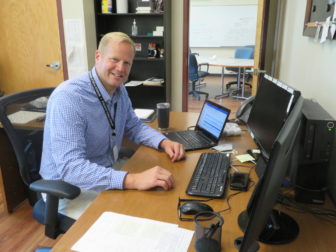
School board members had watched a presentation on the changes by Swensen at their meeting on June 2. Ferris said the board will not take any more actions on the Alternative Program, until educators come back to them with updates.
At the June 2 meeting, Swensen said they are looking to restructure the program from an isolated alternative school to more of a flexible, inclusive model.
“By doing that, we can expand the impact of the alternative program beyond the few students that have currently enrolled to be in it next year, because we’re finding a lot of students on the main campus have similar needs to the students enrolled,” he said.
Swensen said the current program is all or nothing, because students choosing to enroll in the Alternative School are isolated.
“This is going to be a little more fluid, so it’s going to create more of an inclusive culture,” he said.
The Alternative School has been housed inside Masuk for the past five years.
“I think what we didn’t do is get rid of that stigma of the Alternative kids or the Alternative Program,” Swensen said. “The needs of the kids enrolled in that program and the needs of the students at Masuk are the same. What we want to do is reallocate those resources to meet the needs of more kids.”
In the restructured program, Swensen said Alfandre and Petrie will collaborate with other teachers and staff and, because of schedules being more aligned, students can choose to spend some periods in an Alternative classroom and take some classes with the general population on subjects they are interested in.
“We have kids who may benefit from alternative school for part of the day, maybe one period to get certain supports, whether academic, behavioral or social/emotional,” Swensen said. “For kids that need the alternative model throughout the day, this program will afford them that opportunity.”
Swensen said the changes will allow Masuk to maximize school resources and Ferris expressed his belief that it’s more inclusive and a better use of staff.
On June 3, Swensen sent a letter out to families, explaining the restructuring of the Alternative Program. He promised to continue the individualized support for students’ academic and social-emotional needs.
“To ensure a smooth and transparent transition, we will meet with each student and communicate directly with families to share specific information about what these changes will mean for their child,” Swensen wrote. “As always, we welcome your questions, insights, and feedback.”
“Your partnership is invaluable as we work together to shape an educational experience that supports your student’s growth and success,” he wrote. “We are confident that these improvements will strengthen the overall program and ensure that each student receives the support they need to thrive.”
An ‘insult’
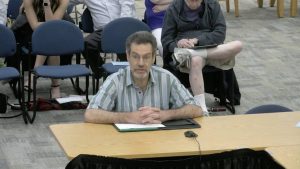
In addition to former Alternative Program students speaking out against the restructuring during the Board of Education meeting on July 16, one of the teachers that heads up the program, Victor Alfandre, expressed his opposition to the changes.
“On May 22 of this year, Pat [Petrie] and I were abruptly notified that, quote, ‘we will continue to have alternative programming, but we will no longer have a standalone alternative program,'” said Alfandre, an alternative education teacher since 1997.
“We were shocked,” he continued. “It was the second significant alteration and, I will say insult to what we have done. The first being moving us up into the building and taking away the individual space we had. I understand budget constraints. I get it. But there are other ways of dealing with it.”
Alfandre said the changes are reducing the alternative program to “a basket of services,” rather than maintaining it in its most effective form.
“Alternative education programs are not just supplements,” he said. “They are essential lifelines for students whose needs cannot be met in traditional school environments.”
Alfandre said a number of students in the alternative program deal with issues like chronic absenteeism, mental health crises, explosive behaviors, and complex home lives involving incarceration, food insecurity, addiction and caregiving responsibilities.
“These students face overwhelming barriers to success,” Alfandre said.
Of the 20 students in the program this year, he said four are living with caregivers other than their biological parents, six girls suffered extensive sexual violence, five are on the LGBTQ-plus spectrum, two had mothers who were murdered, five had been institutionalized or hospitalized for a suicide attempt, four with an identified substance abuse disorder.
“Of those 20 students, only one was outplaced to a therapeutic day program — only one,” Alfandre said. “In each case, past and present, the alternative education program at Masuk High School provided, not just academic support, but safety, connection and personalized guidance, preventing costly outplacements and avoiding dropouts.”
“Without this program, many of these students would have likely been lost to the system, resulting in longterm economic and social loss for the district,” he said.
Alfandre spoke of how “countless” alternative graduates are now mechanics, plumbers, electricians, veterans, landscapers, hairdressers, barbers, nurses, graduate students, media specialists, event planners, therapists and teachers.
While well intentioned, he expressed his concerns that changes to the program could result in the stripping away of a crucial support structure for the most vulnerable students by removing the consistency of dedicated staff and a stable peer group.
One of Alfandre’s concerns is the loss of a school bus that arrived with students in the Alternative Program earlier in the morning. Due to the aligning of the schedule with Masuk, Kobza said the bus is not something the district is planning for.
‘Some bumps in the road’
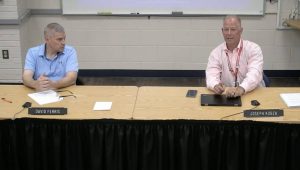
The superintendent expressed his respect for Petrie and Alfandre and recognized the success of the Alternative Program over the years.
“I think once we get into this school year, they’re going to find the benefits,” Kobza said of the teachers.
Swensen said administrators will rely on Masuk’s teachers to let them know how the restructured program is going throughout the year.
Kobza said, “I can almost guarantee we will have some bumps in the road. It will be new for everybody. If we have to make changes, that’s what we’ll do.”
“It’s an ongoing reflective process, finding what to eliminate and what to revise,” Swensen said.
“There’s some great success stories,” Ferris said. “We love the fact our staff has done a phenomenal job. We’re looking at how we can adapt and make things better.”
“Pat and Victor have a lot of experience working with kids and a lot of our special ed teachers are really excited,” Kobza said of the changes. “Our goal is to meet the individual needs of a particular subset of students and we will work on it and revise it until we get it right.”
All respectful comments with the commenter’s first and last name are welcome.


Maybe there could be two Alternative Programs – one like today and another more inclusive. And, some student’s needs may be met with a combination of the two programs. I know this could be an impact to the budget. But that impact may be lessened by adjustments to teacher’s and student’s schedules and well as other adjustments. A list of needs for each student could be examined to see if there are overall common needs that could go in the limited Alternative Program and then another for more inclusive. The current Alternative Program seems too successful to risk changes. So, baring significant budget impacts, a separate more inclusive version could help.
Regarding your article, I have several concerns.
My name is Emily Cornut and I was one of the students who spoke the night of the Monroe Board of Education meeting and was mentioned in this piece. Although I am deeply honored, I am concerned about some of the misinformation fed from the Board of Education regarding the program. To put it simply, there were no misunderstandings. As Victor Alfandre stated, “we were shocked.” This shock has happened once before when they decided to move the Alternative Program from being off-campus to on-campus in the mainstream school system of Masuk High School. For myself and fellow students, we were enraged when this change happened. It caused us fear, anxiety and dread that once again, our voices would go unheard and we would be swept under the rug. There are little to no benefits from changing a stand-alone program to something mainstream. For Swenson to state that “the needs of students at Masuk are the time,” is completely untrue and is disheartening to hear. As a student and alumni of the alternative program, my needs were vastly different from students attending high school in a traditional setting. To “reconstruct” a program that has had success for over a decade would be ineffective and overlooks everything that myself, parents, fellow alumni and Victor Alfandre stated in speeches that night.
Myself as well as alumni, parents and Victor Alfandre would greatly appreciate being contacted about the truth regarding the future of the alternative program. As I stated in my speech, “These programs don’t just help students graduate. They save lives.”
Thank you,
Emily Cornut
What is the plan for kids with violent tendencies? For example, kids who have threatened other students with gun violence? Will they mainstream those kids, or send them off to a different school?
It’s not JUST kids who have emotional needs, they HAVE used this program to physically (temporarily) separate potentially dangerous students from the main student body.
Dear Members of the Monroe Board of Education,
I am writing to express my deep concern and strong opposition to the proposed changes to the Monroe Alternative Education Program.
As a special education teacher with 38 years of experience, and as the parent of a former student in the alternative program, I have witnessed firsthand the critical role this program plays in the lives of students who have struggled in traditional educational settings. These are not simply students in need of academic support—they are young people who require environments that are intentionally structured to foster safety, trust, and individualized growth.
When decisions about educational models—particularly those involving alternative or specialized programs—are made without transparency, collaboration, or meaningful consultation with educators, students, and families, the consequences can be deeply harmful.
Students in alternative education settings are often there because traditional models have not met their academic, social, or emotional needs. These programs are not just classrooms—they are safe havens, support systems, and communities built around relationships. Abrupt or unilateral changes to these environments, especially without input from those who live and work within them every day:
Destabilize students who may already struggle with transitions or have a history of trauma;
Sever the trusted relationships with adults and peers that are central to their growth and healing;
Disregard Individualized Education Programs (IEPs) and carefully developed support plans that take months or years to implement effectively;
And ultimately send a discouraging message that the needs of these students are secondary or expendable.
Educational equity demands that we listen to and involve those most directly impacted by our decisions. Disrupting alternative education programs without that engagement undermines student well-being and erodes the trust required for meaningful learning and progress.
Victor Alfandre, Patrick Petrie, and the entire staff of the alternative program have served as a lifeline for countless children in our community. Their compassion, dedication, and individualized approach have made a profound difference in the lives of students who might otherwise fall through the cracks.
This program provides not just education, but hope, stability, and a sense of belonging for students who need it most. To jeopardize that is to jeopardize their futures.
I respectfully urge the district to reconsider any changes that would disrupt this essential support system. The alternative program is not just an option—it is a foundational and irreplaceable part of our educational community.