MONROE, CT — The Monroe Board of Education’s Ad Hoc Facilities Committee had recommended a $110 million project to reopen Chalk Hill School, with a third-story-addition, as phase one of a solution for the town’s student space needs.
Financial reimbursement would bring the cost to the town down to an estimated $67,891,208, but structural engineers still must determine whether Chalk Hill could accommodate a third floor.
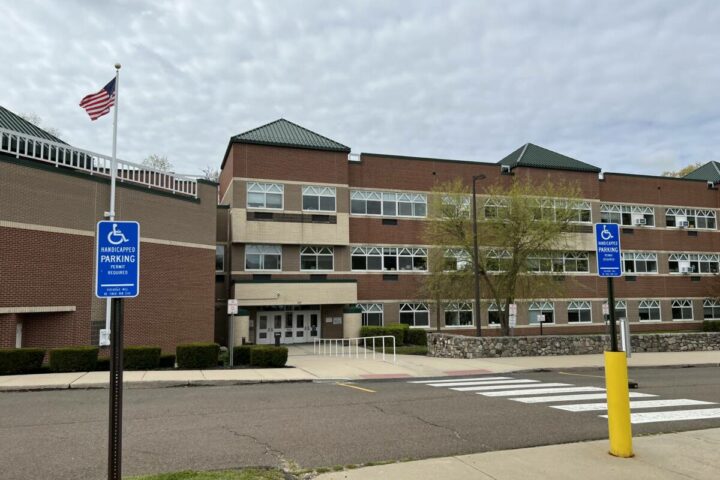
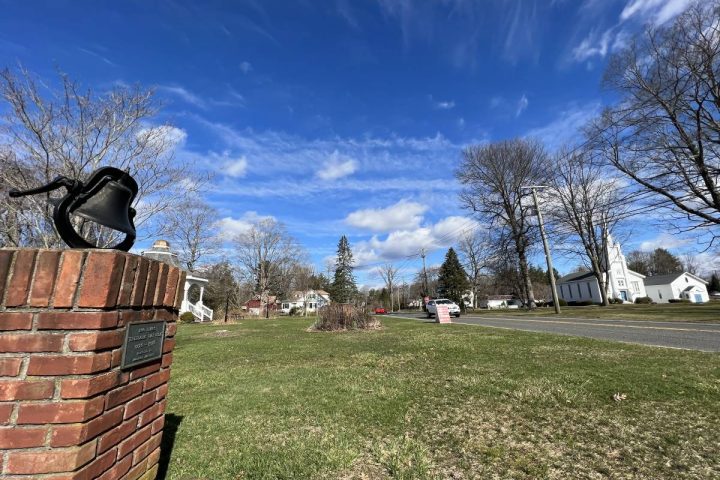
First Selectman Terry Rooney offered the town-owned St. Jude building at 707 Monroe Turnpike as another potential option.
“I felt it was prudent to offer the old St. Jude school as a space needs option, therefore the ad hoc committee would have the opportunity to consider all town facilities,” Rooney said Thursday afternoon.
Board of Education Chairman David Ferris, who also chairs the committee, said he graciously accepted the first selectman’s offer to consider the building. But after the building was vetted, committee members decided to stick with their recommendation of Option B.
Superintendent Joseph Kobza participated in a walk through of the building with town officials. Ferris said he did not go to avoid influencing people’s observations either way.
Then Ferris reached out to Silver Petrucelli & Associates to do an analysis of the old building, built circa 1962, to be shared at the committee’s meeting Wednesday.
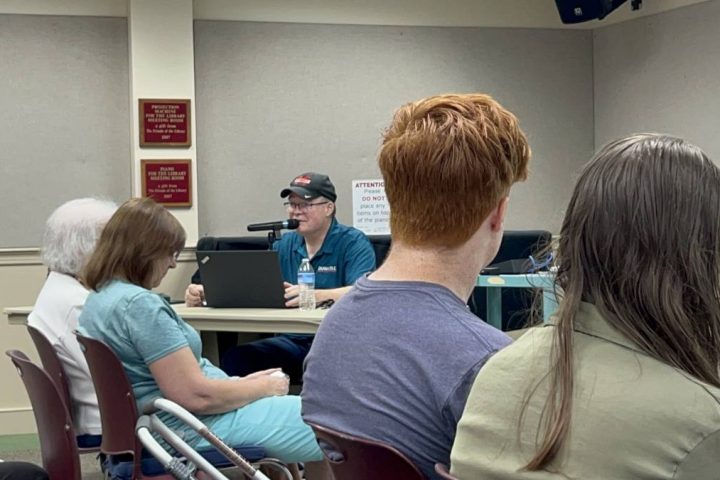
“We toured the building and drafted floor plans,” said Michelle H. Miller, a project manager and architect with Silver Petrucelli & Associates.
But she determined the small size of the building and its campus does not make it an ideal option.
Miller said the property is only 5.9 acres, when her firm prefers at least 10 acres for a school campus to allow for more room for buses, parking and ballfields. The septic system would also need to be upgraded.
The building is riddled with cracks and random displacement of bricks, and a load-bearing wall in the gym is bowing out and getting rebuilt, according to Miller.
She noted how a storage building has mold and sheathing and timber joists with areas of deterioration.
The school building also has deteriorating concrete windowsills, no sprinkler system or building-wide fire alarm and detection system. The fire alarm system it does have is near or at the end of its useful life, according to Miller.
The water heater is nearing the end of its useful life, it has an inefficient domestic hot water tank, and a water boiler nearing the end of its useful life, she said.
Miller also said sections of hot water heating piping are missing insulation, the pneumatic control system is antiquated, air handling units in the gymnasium are nearing the end of their useful life, and the inverter system is antiquated.
“The only ventilation is the windows,” Miller said.
Among her other observations, the electrical wattage per square foot is low and several required upgrades are needed to be Americans with Disabilities Act (ADA) complaint.
Program floor plan deficiencies that were identified include:
- Lack of small group instruction/SPED
- No art, music classrooms
- 11 classrooms
- No media center
- No secure vestibule
- Limited administration space
- No elevator along with other ADA shortages
“The kitchen is incredibly small,” Miller said. “I think it only works as a warming kitchen. You’d have to bring food in from the outside.”
She also said the hallways are narrow, the classrooms are a good size but have asbestos floor tile, the ceiling heights are low, and the gym and cafeteria are a shared space.
If St. Jude were to be opened as a public school, Miller said options would be explored to add a third floor.
Potential uses
Miller said St. Jude could be used as a small neighborhood elementary school, an upper elementary school for grades five and six, or as a small middle school.
As an elementary school (grades K-5) it could accommodate approximately 270 students.
“This concept relieves the existing three elementary schools, but does not solve middle and high school enrollment,” Miller said of reducing overcrowding at town schools.
As an upper elementary school, St. Jude could have an enrollment of 660 students.
“This concept relieves all the schools, but does require an extensive addition to St. Jude and will work only if another floor could be added,” Miller said.
In a middle school – STEM Academy program option, St. Jude could hold up to 300 students.
“This concept relieves the middle and high schools, but does not solve elementary school enrollment,” Miller said. “It does require additions and modifications to St. Jude.”
The total estimated construction costs to make St. Jude viable as a school is $66,343,700. The town’s share after state reimbursement would be around $41,225,975.
By contrast, Chalk Hill would cost around $110,040,300 with a third floor addition — an estimated $67,891,208 cost to the town after state reimbursement.
The cost of a Chalk Hill project without a third-floor addition is estimated at $77,518,300 or a $48,169,872 cost to the town following state reimbursement.
Among the options in Miller’s presentation were:
- 1A: Renovate and expand Chalk Hill or St. Jude for desired grade structure and programs
- 1B: Renovate and expand Monroe Elementary School for desired grade structure and programs. Address increasing enrollment and most needed facility conditions/infrastructure
- 2A: Renovate and expand Fawn Hollow for desired grade structure and programs
- 2B: Renovate and expand Stepney Elementary School for desired grade structure and programs. Address program deficiencies and needed facility conditions/infrastructure
- 3A: Minor renovations to Jockey Hollow Middle School for program, HVAC and facility conditions
- 3B: Improvements to Masuk High School for HVAC and facility conditions. Address program deficiencies and needed facility conditions/infrastructure.
No committee support
While responding to committee members’ questions at Wednesday’s meeting, Miller said moving Central Office to St. Jude was not a viable option.
Among the committee members, the only support shown for St. Jude came from Town Council Chairman Jonathan Formichella, who contended it could be used instead of portable classrooms, while other schools are under construction.
“I wouldn’t throw it out whole cloth and say it’s not a possibility at all,” he said.
But no one else thought St. Jude was a viable option.
“I don’t think St. Jude should be on the table at the eleven-and-a-half hour,” said Jerry Stevens, a school board member.
“It seems like an awful lot to spend for what the result would be,” said Michael Ganino, a resident serving on the committee. He also said St. Jude is a no for him.
Asked if St. Jude could serve as a transitional school, Miller said to receive financial reimbursement, there would would have to a commitment to use the building as a school over the next 20 years.
“Chalk Hill fixes your problem,” Miller said of Option B, which the committee had previously recommended.
Of using St. Jude, she said the district would be bringing kids there for less programming.
Christine Cascella, vice chair of the school board, said using St. Jude would add another building for the Board of Education to operate and maintain, and Stevens talked about the added costs.
Cascella also said the school board cannot ask the town to hold onto St. Jude for 10 years in case the district needs it in the future.
“St. Jude was supposed to be used as a community center to benefit the entire community,” said Steve Kirsch, who serves on the Board of Finance. “I don’t want a seventh building. It’s not big enough. It doesn’t give us the programming we need. We should advance programming. I’d hate to spend money and have less programming.”
Megan Damato, a Parent Council co-president, said, “I don’t see it meeting the needs. I think Chalk Hill is the better option.”
Fellow Parent Council co-president, Tim Piedmont, agreed.
A discussion about borrowing, debt service, the town’s bond rating and taxes ensued.
“I understand money is important, but don’t take the vote away from the parents,” Stevens said. “We’re supposed to accommodate enrollment.”
Though the committee stuck to its recommendation of Option B, Ganino said, “we need a contingency plan if we can’t have a third floor on Chalk Hill.”
Committee remains intact
Ferris decided not to disband the committee, so members can attend a Board of Education meeting and be able to do more work should the board request it.
The Ad Hoc Facilities Committee’s charge was to review potential options to the town’s school space needs and make a recommendation to the Board of Education, which will ultimately decide how to move forward.
If the school board chooses an option, town and voters’ approvals will also be needed to pursue it.
All respectful comments with the commenter’s first and last name are welcome.