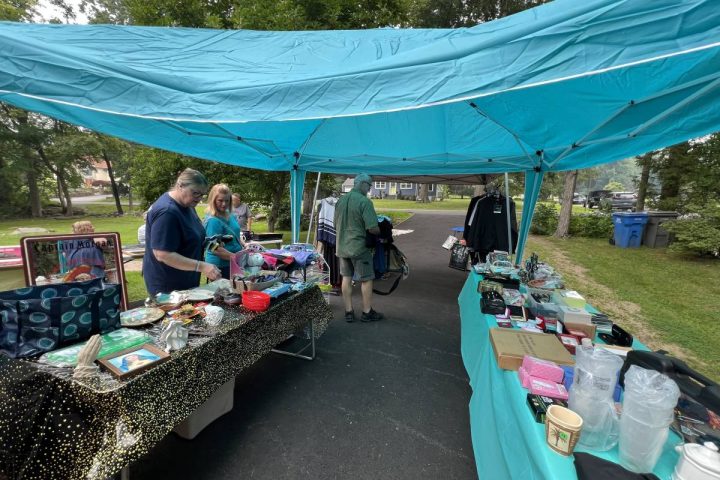
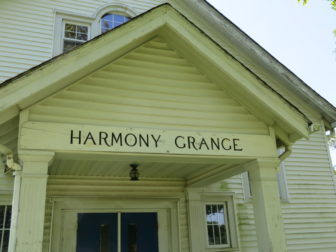
MONROE, CT — Harmony Grange No. 92, the old white building at 103 Hurd Avenue, sprung to life last Saturday as residents took part in agricultural activities and a tag sale during the organization’s annual Spring Fair.
Founded in 1889, Monroe’s Grange remains active with 22 members and its rich history is preserved through minutes dating back to its very first meeting.
“It’s not typical,” Elizabeth Jensen, president of Redding Grange No. 15, said of Grange halls throughout Connecticut. “A lot are struggling. If you don’t have a minimum of 13 members, you don’t have a Grange and they close the building.”
“A very small amount of time and investment from community members makes a huge difference in keeping your town’s Grange going,” she said.
Among the most famous Grange members in the country’s history were legendary New England artist Norman Rockwell, President Franklin Roosevelt and First Lady Eleanor Roosevelt. Once a fixture in many Connecticut communities, Jensen estimates there are only about 30 active Granges left in the state.
Jensen, who led a presentation on the history of Monroe’s Grange in the Rotary Room of Edith Wheeler Memorial Library one recent Monday evening, recalled the effort to save the Grange in her hometown.
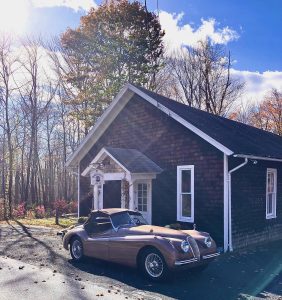
A small historic building resembling an old schoolhouse was on the market in Redding. It had peaked Jensen’s curiosity, so she called the Realtor.
“I just felt compelled to call,” she said. “It was a Grange hall. It just closed. They were sad to close the building. They said, ‘if you can keep the Grange going, they’ll probably give you the building,’ and I said, ‘okay.'”
Redding Grange No. 15, a social and civic organization, was founded in 1875. “It’s like a fraternal order,” Jensen said.
She needed 13 members, but didn’t know anybody in Redding. “I was sitting on the steps of the Grange hall when a woman named Cathy said, ‘hello,'” Jensen recalled.
Cathy, a neighbor living next door, was interested in the fate of the old building. When Jensen told her what she was trying to do, Cathy was eager to help.
Jensen got in touch with the first selectman and met a man named Bill Hill, who is now vice president of the Grange. They later learned his great grandfather was the original president of Grange No. 15.
Organizers successfully obtained Redding Grange No. 15’s charter in 2021 and held a ceremony to celebrate.
“In the beginning it was really an effort to save the building, but as we learned more about what it does, the Grange became the backbone of the community,” Jensen said.
An agricultural, educational activity must be held every year for a Grange to maintain its tax exempt status.
“We started a farmers’ market last year,” Jensen said. “If you get everyone involved and look at what the needs are, you can have a robust, thriving organization.”
Jensen said many people wanted to be involved with the event and much of the produce from it was donated to their town’s food pantry.
Community and agriculture
The National Grange and the Order of Patrons of Husbandry, a social organization encouraging families to band together to promote the well-being of the community and agriculture, was founded in 1867.
Though originally formed to serve the interests of farmers, the nonpartisan organization broadened its focus to a wide variety of issues to meet expanding community needs. Membership is open to anyone age 14 and older.
In its earliest days, the National Grange borrowed some of its rituals and symbols from Freemasonry.
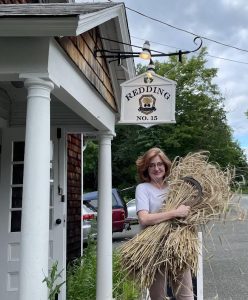 Just like a mother’s popular recipes, if the traditions of a Grange are not passed on to new generations, Jensen said it all goes away. She is spearheading efforts to keep Granges going in other Connecticut towns.
“When I think of the things in my life, saving our Grange is probably the best one,” she said. “I want to make sure I can help as many Granges as I can.”
Jensen has helped Wallingford, whose grange was about to be sold, and Wolcott, whose membership was down to three people, to put their Granges back on solid footing. She said they also identified grants providing money for improvements such as a handicapped accessible bathroom in one hall.
“A small group of people can save the world,” Jensen said.
Harmony Grange
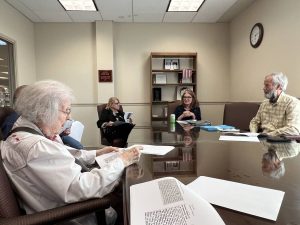
During her presentation at Edith Wheeler Memorial Library, Jensen praised the work Harmony Grange does for its community and led a discussion on ways to keep the organization vibrant.
Several former and current Harmony Grange members sat around the table, including its current president, Betty Blackwell. She said her Grange offers rentals for events such as weddings and young children can play soccer on its grounds.
Blackwell said teenagers often volunteer at the Grange’s events as a way for area youth to learn about the organization and what it does in town.
“Harmony does great work,” Jensen said.
There is a $30 annual membership fee for Harmony Grange, with an additional dollar for add ons. Visitors are welcome to stop by and learn about the Grange at its meetings, held on the third Friday of every month at 7:30 p.m. For information, visit its website.
Among those at the library event was Lois Hurd, 93, who was a member of Harmony Grange for 25 years.
“When I married, I didn’t work. I joined the Grange so my husband and I could have health insurance,” Hurd said of a benefit the Grange no longer offers.
A Grange has Three Graces, representing the founding goddesses of agriculture who are integral to its ritual and symbolism. Honored in Grange meetings, the Graces are Flora (goddess of flowers), Pomona (goddess of fruit) and Ceres (goddess of grain). Hurd had served as a Grace.
She remembers when her parents, Benjamin and Marion Hurd, were part of a square dancing group that won an award. She said their costumes were made out of feedbags.
“We demonstrated square dancing at the Danbury and Great Barrington fairs,” Hurd said. “I enjoyed the Grange. We’d take the train up to Hartford. We visited Granges. Most of them had an Indian name, like Pequot Grange.”
All respectful comments with the commenter’s first and last name are welcome.