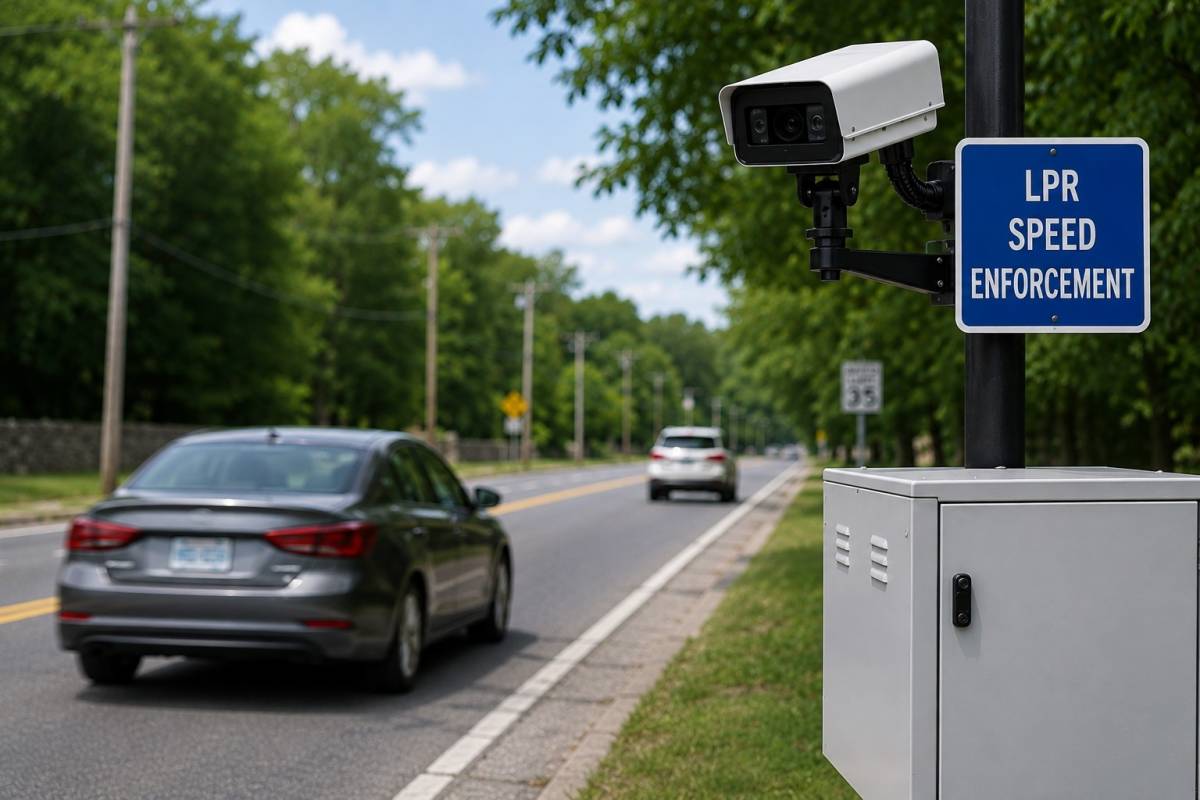
MONROE, Conn. — Fairfield and Milford are using license plate reader (LPR) cameras to enforce speed limits in areas with a high number of crashes. When there is a violation, the cameras collect all of a car’s registration information and sends it to a private company that mails the driver a ticket, along with its own service fee.
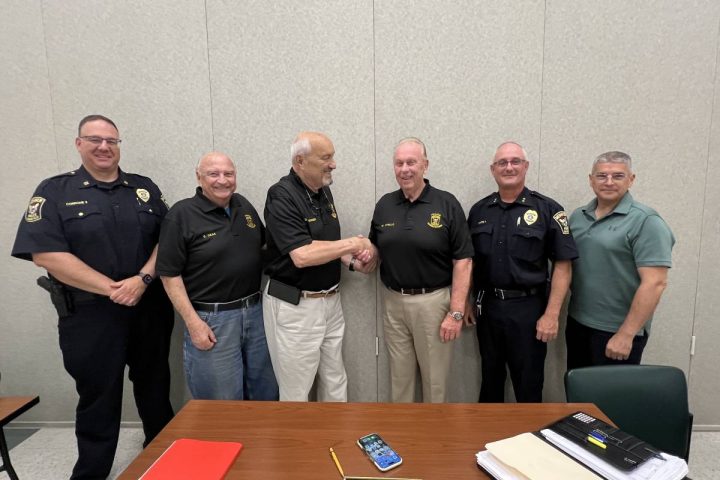
This type of traffic enforcement has angered many drivers and sparked debate among Monroe residents online, with people arguing for and against it. Due to the public’s interest in the topic, Monroe Police Chief Keith White decided to share his opinion at the Board of Police Commissioners meeting Wednesday evening.
“I am not in favor of the speed cameras,” he said. “I believe it’s a flawed system.”
White said tickets are issued for traveling at an “unreasonable speed.” “What’s unreasonable to someone may not be unreasonable to someone else,” he added. “It’s subjective and the town’s speed limits were set decades ago.”
White used Pepper Street as an example of a street with a speed limit that has been 25 mph since the 1970s without changes, despite numerous road improvements over the years.
“So if you wanted true speed enforcement in that area, it would come off the 25 mph speed limit, which would result in the vast majority of travelers receiving automated tickets,” he said.
Monroe has cameras that use LPR technology, but White said it is a different type of camera, used for the sole purpose of fighting crime. The Flock cameras only capture the license plate and a snapshot of a vehicle, according to White, who said Monroe’s cameras track stolen vehicles coming and out of town.
One supporter of using LPR cameras for traffic enforcement suggested it to White as a way for the town to make revenue, but White said that cannot be the reason a town does it. He said a town must show accident statistics and documentation supporting the need for it in a particular area. White said Monroe does not have any areas that warrant that.
Another reason the chief opposes using the cameras for speed enforcement is that a third party company would make money off of Monroe residents and people driving through town.
Though White opposes this type of enforcement, he told the commission he is open for further conversations should the town desire this type of action.
“I’m for school bus traffic cameras,” White said of another type of enforcement, in which the stop arm of a school bus has a camera. “If someone drives through, it shows you did it or didn’t do it. It’s black and white.”
Commissioner David Ferris, who is a retired police lieutenant, expressed his agreement with White’s stance against using cameras for speed enforcement. After driving through Fairfield recently, Ferris said he received a ticket in the mail.
“I didn’t think it was unreasonable,” Ferris said of his speed, “but I paid the $50 ticket and $15 service fee to the company.”
Ferris said enforcement with cameras takes away the personal interaction with a police officer, who could decide to use discretion at times and educate the driver about the reasons for enforcement.
“I’m not in favor of it,” he said. “I’m in agreeance with the chief.”
After the meeting, Ferris told The Sun there is also the problem of tickets being sent to the registered owner of the car, who may not have been the one driving. Then there is a burden of proof to show who was driving.
“Do we want a safe community? Yes we do,” Ferris said. “We want it in the officer’s hands.”
All respectful comments with the commenter’s first and last name are welcome.